

 Português
 EspañolSoon
 العربيةSoon
 FrançaisSoon
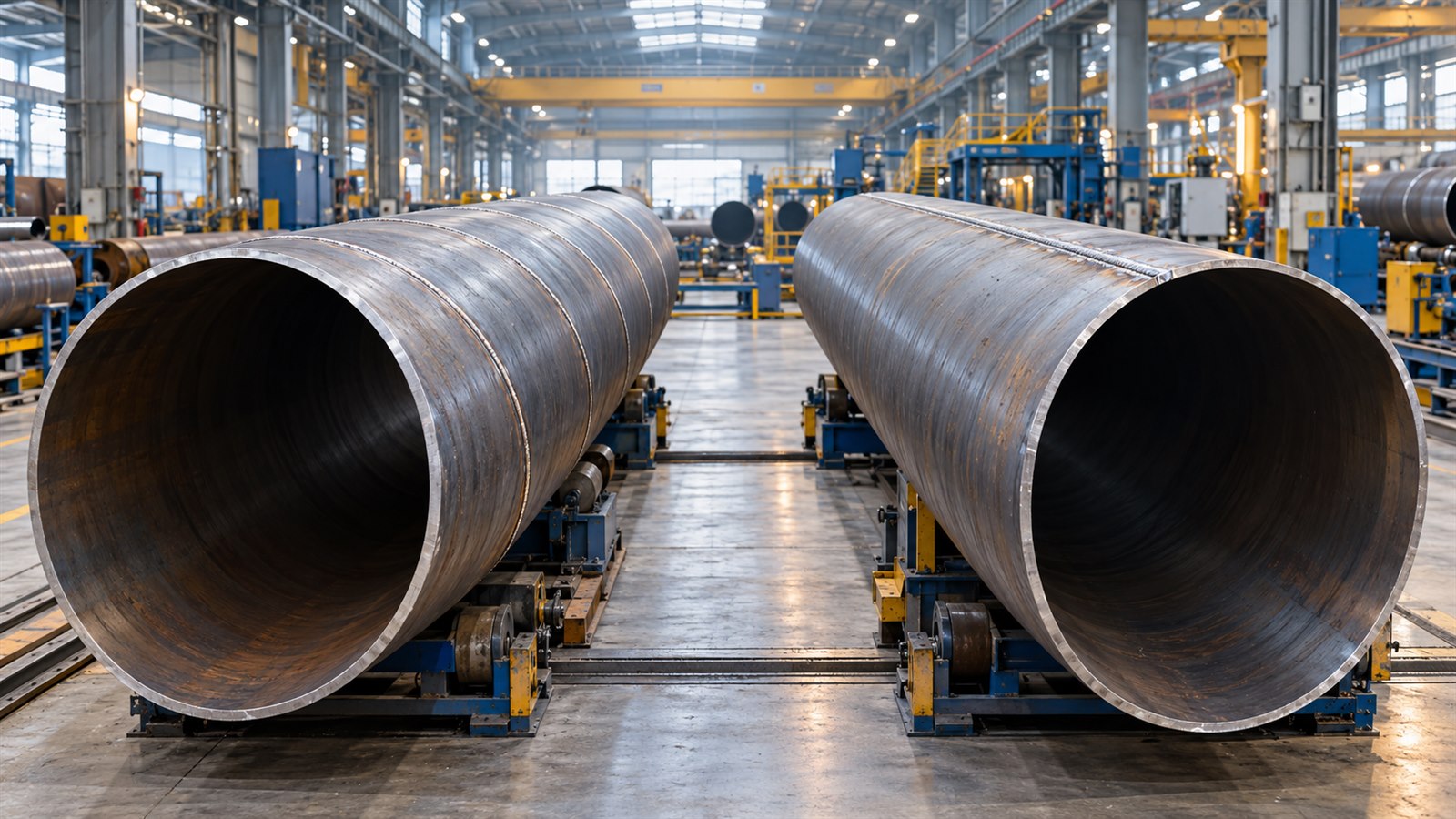
Start with the project—not the acronym
HSAW, also called SSAW, and LSAW are both submerged-arc welded large-diameter pipe routes. Neither is universally better. The correct route is the one permitted by the governing specification and demonstrably qualified for the exact grade, outside diameter, wall thickness, length, service and testing programme.
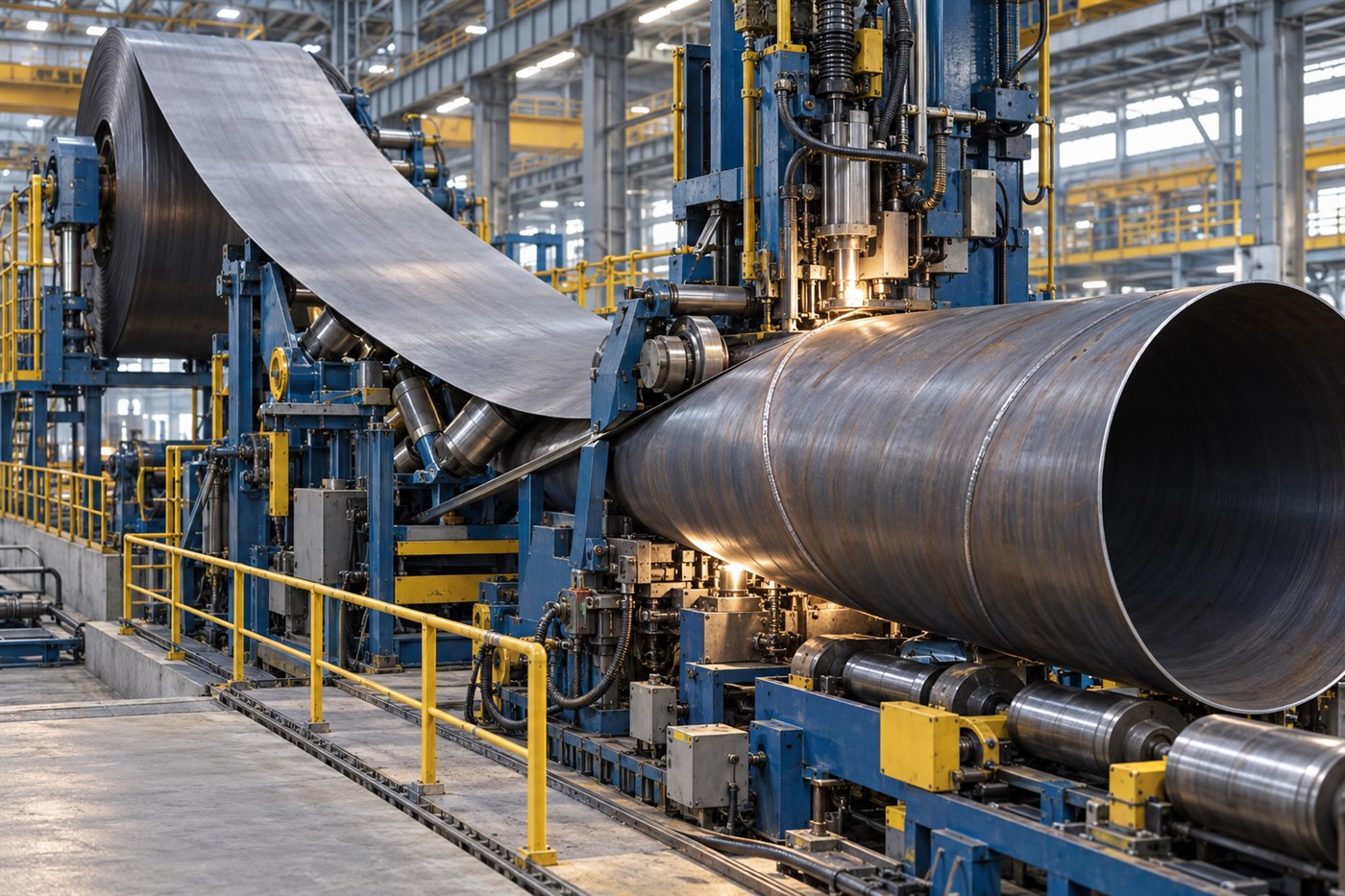
How HSAW / SSAW pipe is made
HSAW pipe is continuously formed from steel coil at an angle, producing a helical seam that is normally welded from the inside and outside. Coil width, forming angle, mill tooling and available coil properties influence the achievable combination of diameter, wall, grade and output. The route is widely used for water transmission, piling, structural work and accepted line-pipe duties.
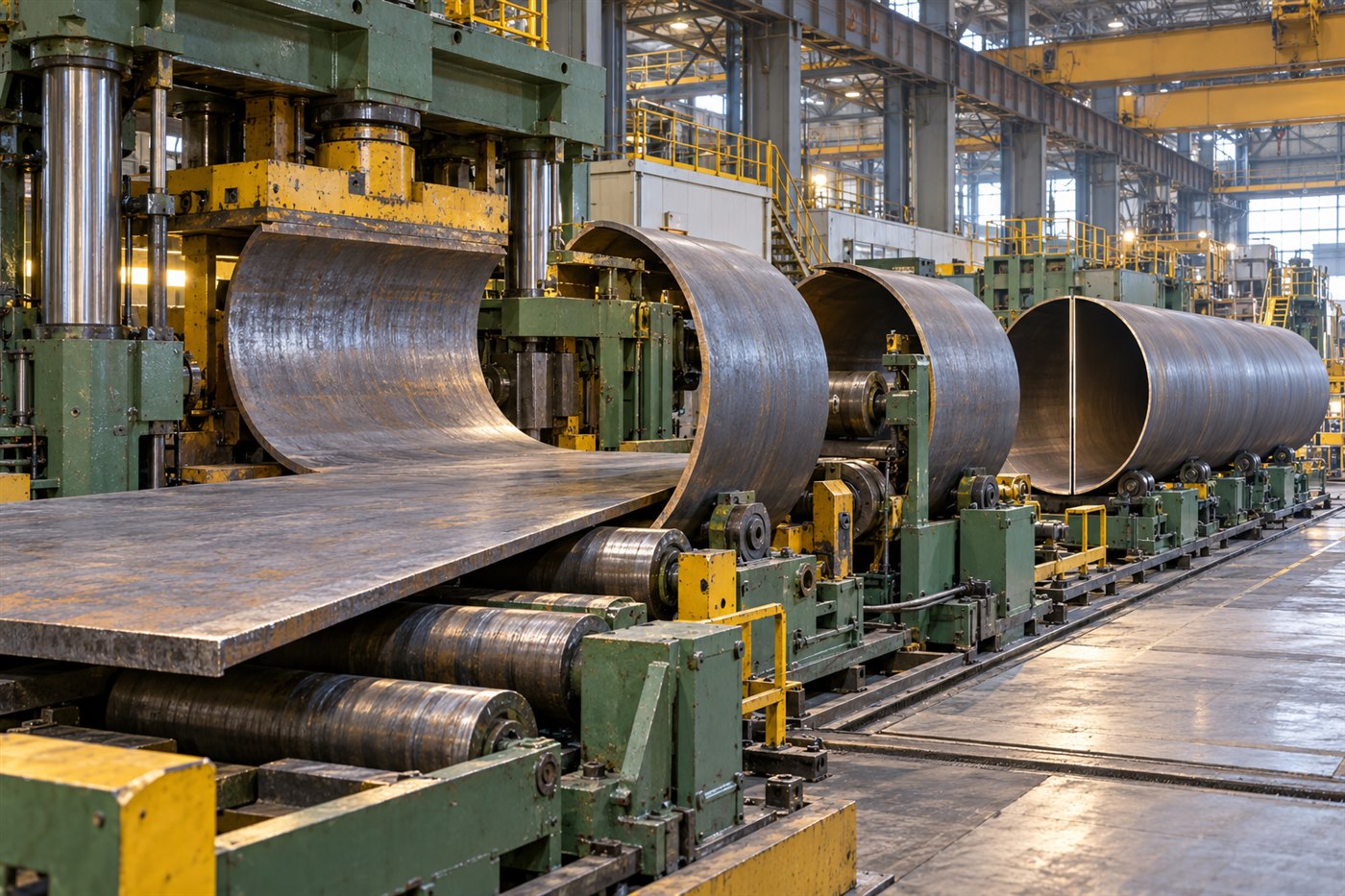
How LSAW pipe is made
LSAW pipe starts from plate. UOE, JCOE or related press-forming routes shape the plate before welding one straight longitudinal seam. Plate availability, press force, forming geometry, expansion, weld procedure and testing capability define the real mill range. LSAW is frequently specified for demanding pressure, heavy-wall, low-temperature or tightly controlled dimensional applications.
Dimensions and quantity change the shortlist
HSAW lines can offer flexibility across large diameters and project-scale quantities because one coil-forming line may address several diameters. LSAW capability is tied more directly to plate width, plate thickness and forming press limits. This does not mean every HSAW offer is cheaper or every LSAW offer is heavier-wall: the exact size-grade-length combination must be checked against a named mill.
Let service and specification control acceptance
Water, piling and structural projects commonly permit HSAW when the applicable AWWA, ASTM, EN or project rules are met. High-pressure API 5L projects may permit either route, but owner specifications, fatigue, fracture toughness, collapse, sour service, low temperature and approved-vendor requirements can narrow the choice. A purchasing decision should never override the engineering basis.
Compare different quality risks—not “good” and “bad” pipe
For HSAW, buyers should focus on coil traceability, forming consistency, helical weld alignment and profile, NDT coverage, permitted repairs, hydrotest and pipe-end geometry. For LSAW, plate identity and properties, edge preparation, forming and expansion, longitudinal weld quality, end geometry and supplementary testing deserve equal attention. Both routes require a qualified WPS, calibrated inspection equipment and traceable release records.
Evaluate the complete delivered package
Mill price is only one line. Compare raw-material route, production allocation, coating or lining location, achievable lengths, fittings and field-joint interfaces, inland transport, port handling, vessel plan, inspection attendance, document review and delivery sequence. A technically acceptable HSAW route near the coating plant can outperform a distant LSAW route—and the reverse can also be true.
Use a practical decision matrix
Choose only among routes allowed by the specification. Then compare: exact mill qualification; grade, OD and wall combination; required length; supplementary tests; pressure and fatigue duty; coating and lining compatibility; order quantity and minimum rolling lot; approved-vendor restrictions; production slot; logistics; deviations; and total delivered cost. Record every assumption so competing offers remain comparable.
What to include in the RFQ
State the standard and edition, grade, permitted process, OD, wall, quantity, individual lengths, service, pressure and temperature, ends and joints, fittings, coating, lining, NDT, hydrotest, supplementary testing, EN 10204 certificate, third-party inspection, destination, Incoterm and required date. Use the large-diameter pipe RFQ checklist for the complete data set.
The decision in one sentence
Do not choose HSAW or LSAW by reputation alone. Choose a named, qualified manufacturing route against the complete technical and delivered requirement. Review our HSAW / SSAW supply route, LSAW project supply, or send the specification for comparison.
This article is general guidance. The project specification, current standard edition and qualified engineering review remain controlling.