LARGE-DIAMETER STEEL PIPE

Cement-mortar lined steel pipe

Internal cement mortar lining for steel water pipe planned with water chemistry, pipe geometry, fittings, joints, shop application, curing, inspection and field restoration.

Discuss the requirement ↗
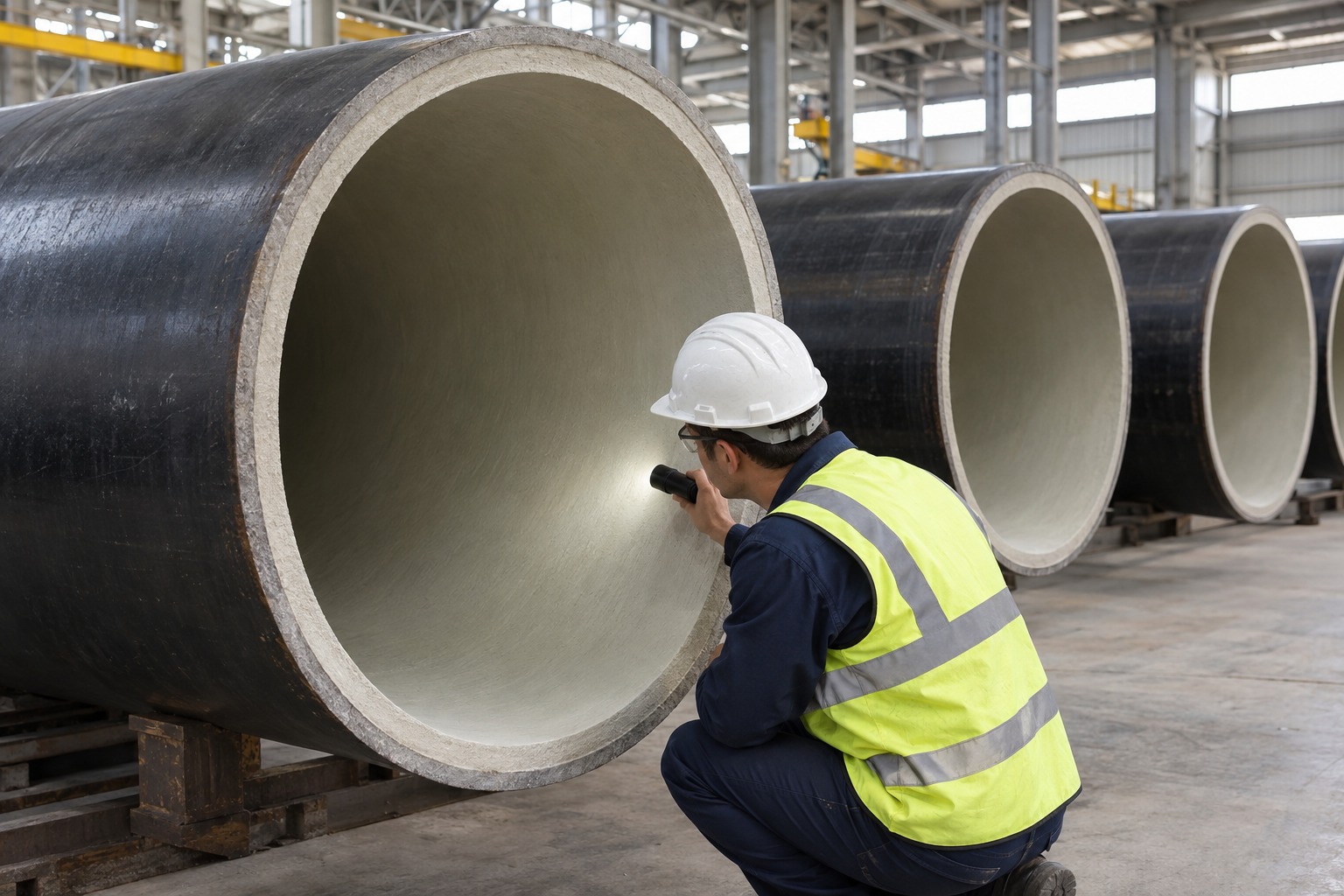
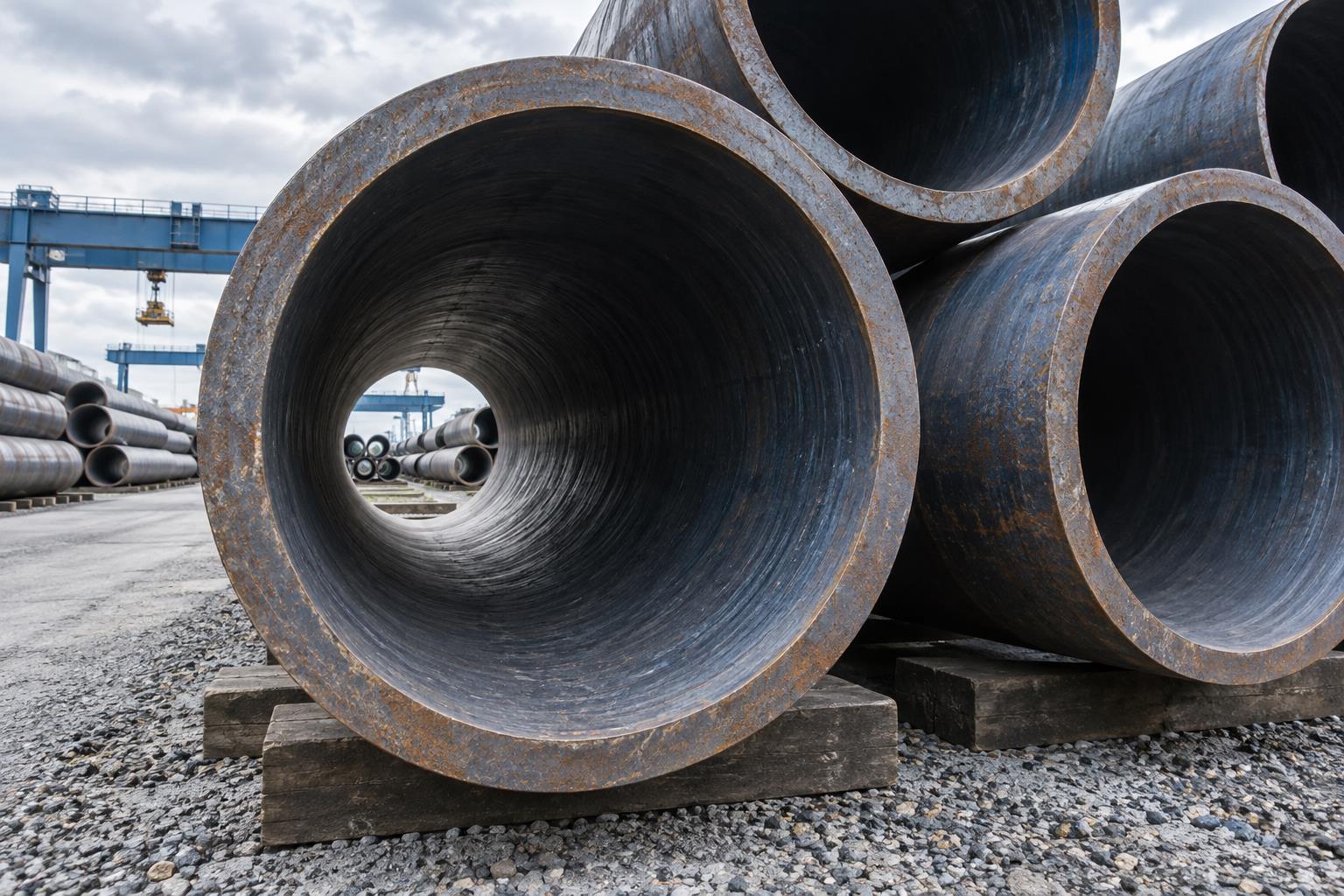
Cement-mortar lined steel water pipe undergoing internal lining inspection
CEMENT-MORTAR LINING INSPECTIONILLUSTRATIVE VIEW
ApplicationWater conveyance
ReferenceAWWA C205 / project
ControlMix / thickness / curing
InterfacesEnds / fittings / field joints

01 / LINING

A factory process with field consequences.

Mix design, surface condition, application method, nominal thickness, curing and inspection are specified before work begins. Pipe ends and joint type determine what is left unlined in the shop and restored after installation.

The lining requirement should be issued with the steel-pipe specification, not added after the pipe and joints have already been selected.
02 / DEFINE THE PRODUCT

Internal cement mortar: specify lined steel pipe, not an unspecified lining service.

Internal cement mortar is the protective layer inside the steel water pipe. Distinguish a complete new lined-steel-pipe supply from lining an existing pipe, external mortar coating or a different pipe material. The RFQ must say whether the supplier provides the steel shell, shop-applied lining, fittings and field-joint restoration materials together.

Use separate dimensions for steel OD, steel wall and lining thickness. Lining reduces the available bore; hydraulic design must use the agreed finished internal diameter. Confirm water chemistry and required potable-water approvals with the project engineer before selecting the system.

Lined-pipe scope: make each interface explicit
InterfaceInclude in the RFQ
Steel shellPipe standard, grade, steel OD and wall, lengths, quantities and joint drawings.
Shop liningLining standard and edition, approved mix, thickness, application, curing and inspection plan.
Fittings and cutbacksWhich specials are lined in the shop, end cutbacks and access for completion.
Field completionRestoration materials, quantities, responsibility, procedure and inspection after jointing.
Transport and releaseHandling and end protection, curing release, repair records, destination and delivery sequence.

03 / STANDARD & SERVICE

Connect AWWA C205 or the project standard to actual water duty.

The purchase specification should state the applicable standard and edition, owner amendments, potable-water certification where required, water chemistry, disinfection method, velocity and operating conditions. Cement mortar is an established option for many water systems, but project approval and service compatibility remain controlling.

04 / THICKNESS & CURING

Define measurable acceptance criteria.

State the required lining thickness and tolerance, application method, curing procedure and the point at which handling or hydrostatic testing may begin. The inspection plan should identify how thickness, surface condition and curing records will be sampled and documented.

05 / JOINTS, FITTINGS & REPAIRS

Treat unlined areas as designed interfaces.

Bell-and-spigot, welded and flanged systems create different cutbacks and access conditions. The RFQ should define shop lining of fittings, field-joint restoration material, surface preparation, curing, repair limits and acceptance after installation.

06 / QUALITY

Inspect the lining through handling and delivery.

Appearance, cracking, hollow areas where applicable, thickness, curing and repairs are recorded to the agreed procedure. End protection, lifting method and separators should prevent impact and abrasion in storage and transport.

07 / RFQ CHECKLIST

Give applicators enough data to quote one complete system.

  • Pipe standard, diameter, wall, length, quantity and joint design
  • Water service, chemistry and potable-water approval requirements
  • Lining standard, edition, thickness, mix and curing requirements
  • Fittings, cutbacks, field joints and repair procedure
  • Inspection points, reports, certificate level and final data book
  • External coating, packing, destination and delivery schedule

Use the steel pipe RFQ guide ↗

08 / RELEASE CHECKLIST

Close the lining records before shipment.

  • Approved procedure, material source and mix records available
  • Surface preparation and application records tied to pipe identity
  • Thickness results and sampling frequency meet the agreed plan
  • Curing conditions and minimum handling time documented
  • Visual findings, cracks, hollow areas and repairs assessed to the specification
  • Cutbacks, ends and fittings match the approved joint drawings
  • End protection, separators, lifting and storage method verified
  • Final inspection report, repair log and document index approved

Use this as a procurement prompt only; the governing standard, project specification and approved engineering criteria control acceptance.

09 / OFFER COMPARISON

Compare the complete lined-pipe package.

Align the named pipe mill and lining facility, governing standard, potable-water approvals, lining thickness, application and curing method, fittings, joint cutbacks, field-restoration materials, inspection plan, repairs, packing and delivery. Confirm who owns every interface between pipe manufacture, lining, external coating and site joint completion.

Review the complete water-transmission package ↗

10 / SCOPE CHECK

C200 and C205 address different parts of the purchase.

AWWA C200 concerns the steel water pipe; AWWA C205 addresses shop-applied cement-mortar lining and coating. Citing C200 alone does not fully specify the lining. Citing C205 alone does not define the steel wall, joints or the complete hydraulic and structural design. Confirm the contract editions and any owner amendments.

Coordinate AWWA C200 pipe dimensions and joints · Send a lined-pipe RFQ with dimensions, water service and destination

References for defining the package: AWWA standards list; STI/SPFA water-transmission specification guide. The contract must identify the adopted edition and owner requirements.

TECHNICAL QUESTIONS

What buyers ask.

Does cement-mortar lining prevent all corrosion?+

It is an established internal protection system for water service, but suitability depends on water chemistry, design, application quality, joints and operating conditions.

Which standard covers cement-mortar lining of steel water pipe?+

AWWA C205 is a common reference for shop-applied cement-mortar lining and coating of steel water pipe, while projects may use other national standards or owner specifications. State the exact document and edition in the RFQ.

How are field joints completed?+

The method depends on joint design and project specification. Access, surface preparation, mortar or compatible repair material, curing and inspection should be planned before delivery.

Can fittings also be cement-mortar lined?+

Yes, subject to geometry and the specified application procedure. Fabricated fittings often require dedicated shop methods and inspection.

What should be checked before shipment?+

Review lining thickness and appearance records, curing evidence, approved repairs, protected pipe ends, identification, packing and the final document index before release.

Is internal cement mortar the same as external mortar coating?+

No. Internal lining is inside the pipe and must suit the water service and finished bore. External coating is outside the steel shell. State each system separately, including joint interfaces and repair responsibilities.

PROJECT ENQUIRY

Put the package in motion.

Share the project scope, specification and destination. We will structure the questions that matter before sourcing begins.

Start an RFQ ↗